Queue Management System in Saudi Arabia: 7 Retail Wins for 2026
A modern queue management system in saudi arabia has moved from a nice-to-have gadget to a core part of how banks, clinics, and retail chains treat their customers. In a market where shoppers in Riyadh, Jeddah, and Dammam expect fast, dignified service, the way a business organizes its lines now shapes brand reputation as much as price or product range. This guide breaks down how smart queueing technology drives measurable retail wins in 2026, and why operators across the Kingdom are investing in it right now.
Waiting is the one experience every customer remembers. Research from service-design teams consistently shows that perceived wait time, not actual clock time, is what frustrates people. A well-built queueing platform attacks both numbers at once, and that is exactly why adoption has accelerated across the Gulf.
Why a Queue Management System in Saudi Arabia Matters in 2026
Saudi Arabia’s Vision 2030 push has reshaped retail, tourism, and public services. Footfall in malls and government one-stop centers has surged, and so have expectations. Customers who book restaurants through an app and track parcels in real time will not tolerate a chaotic, ticket-grabbing scrum at a service counter.
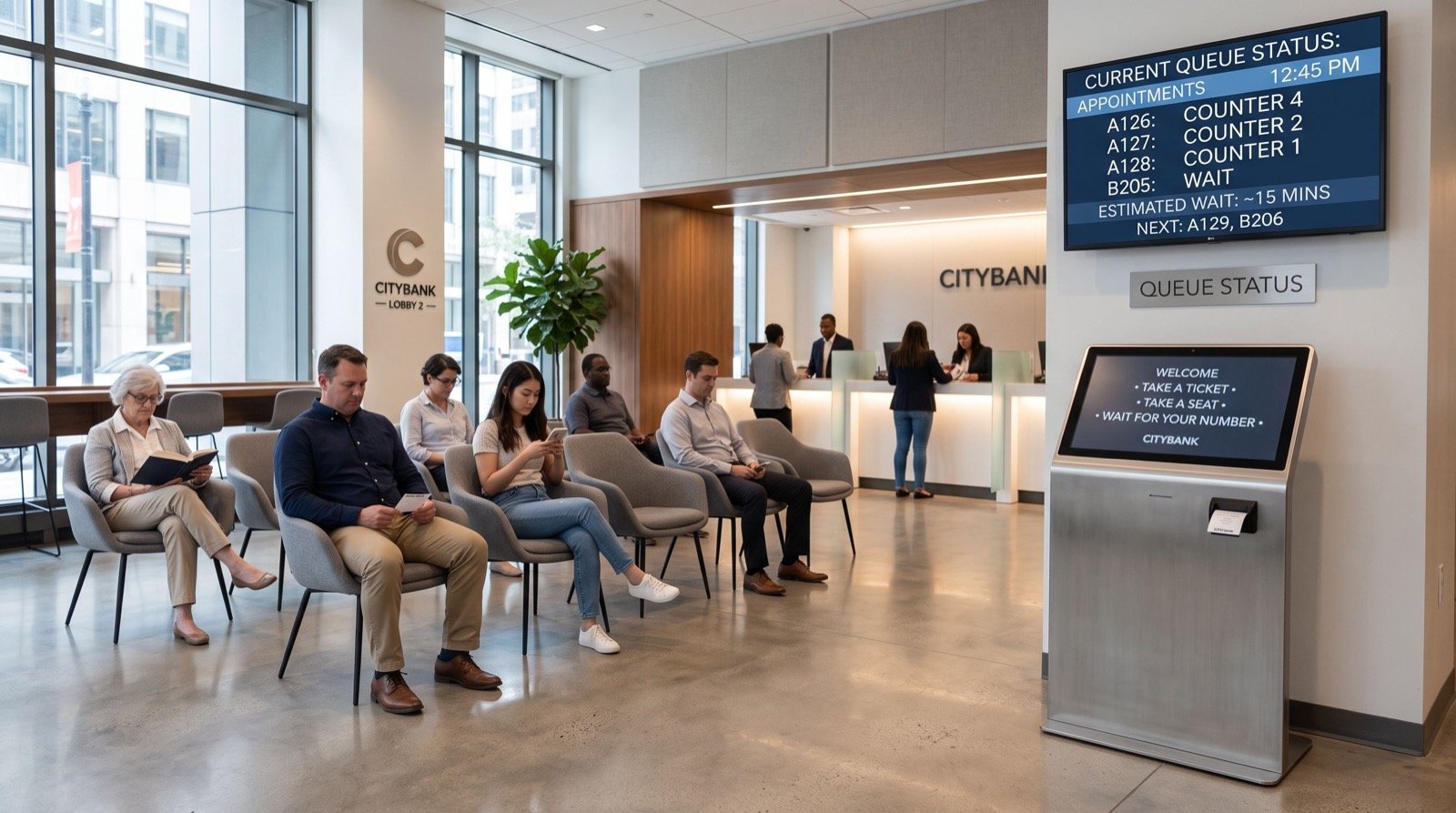
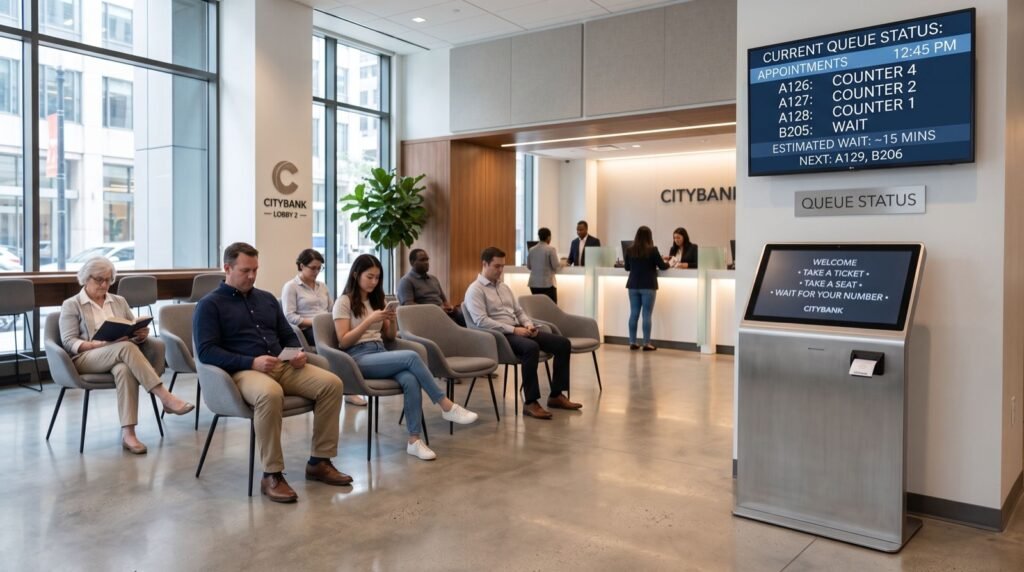
That is where a structured queueing solution earns its keep. Instead of a crowd pressing toward a single desk, visitors take a virtual ticket, see their position on a clear display, and are routed to the right agent when their turn arrives. The result is calmer branches, shorter perceived waits, and staff who can focus on service rather than crowd control.
Operators also gain something they rarely had before: data. Every ticket, transfer, and service interval becomes a measurable event, turning gut feeling into hard numbers.
7 Retail Wins a Queueing Platform Delivers
Here are the concrete outcomes retailers and service providers report after deployment:
- Shorter perceived waits: Clear signage and ticket updates cut anxiety, even when actual time is unchanged.
- Higher conversion: Customers who stay instead of walking out mean more completed transactions.
- Balanced staff load: Live dashboards reveal bottlenecks so managers can open counters before a crowd builds.
- Fair, transparent order: First-come, first-served logic ends disputes and queue-jumping.
- Appointment integration: Pre-booked visits blend smoothly with walk-ins.
- Multilingual support: Arabic and English prompts serve a diverse customer base.
- Actionable reporting: Service-time analytics guide staffing and training decisions.
How the Technology Actually Works
A typical deployment combines several layers that work together quietly in the background. Customers interact with a kiosk or a mobile check-in, while staff see a different, control-focused view. Understanding the pieces helps buyers specify the right system rather than overpaying for features they will never use.
- Check-in point: A touchscreen kiosk, QR code, or reception tablet issues a ticket.
- Queue engine: Software sorts tickets by service type, priority, and appointment status.
- Display and audio: Screens and voice calls announce the next number and counter.
- Agent console: Staff call, transfer, or recall customers with one click.
- Analytics dashboard: Managers review wait times, service durations, and peak hours.
The audio layer deserves special attention. In busy branches, agents often handle phone and in-person interactions at once, so clear hands-free communication matters. A reliable headset such as the Addasound Epic 511 keeps voice calls crisp even when the floor is noisy, which protects both service quality and the agent’s focus.
Choosing the Right Setup: A Quick Comparison
Not every branch needs the same configuration. A flagship store in a Riyadh mall has very different needs from a small neighborhood pharmacy. The table below outlines three common tiers.
| Setup | Best For | Key Feature | Typical Counters |
|---|---|---|---|
| Essential | Small clinics, single branches | Ticket kiosk plus display | 1 to 3 |
| Professional | Banks, retail chains | Appointments plus analytics | 4 to 10 |
| Enterprise | Government centers, hospitals | Multi-site, central reporting | 10+ |
Buyers should match the tier to real footfall rather than ambition. Over-specifying leads to unused modules, while under-specifying creates frustration during peak hours such as late afternoons and the days around payday.
Implementation Tips That Prevent Costly Mistakes
Technology alone does not fix a queue. The businesses that see the biggest gains pair the hardware with sensible process changes. Start by mapping your current customer journey and identifying where people actually pile up. Often the bottleneck is one specific service, not the branch as a whole.
Next, train staff to use the agent console consistently. A system only produces reliable data when everyone follows the same call-and-close discipline. Finally, review your reports weekly for the first month, then monthly. Patterns emerge quickly, and small staffing tweaks often deliver outsized improvements.
For organizations that also want stronger online visibility to match their improved in-store experience, partnering with dependable specialists can help turn satisfied visitors into online reviews and repeat traffic.
Independent service-management research, including guidance published by the Harvard Business Review on the psychology of waiting lines, confirms that managing the perception of a wait is often as valuable as shortening it.
One often overlooked factor is the environment around the wait itself. Occupied time feels shorter than empty time, so branches that pair a queueing system with clear progress displays, seating, and useful information see satisfaction climb even before actual waits fall. In other words, the technology and the physical space should be designed together, not in isolation. Retailers that get this right turn the waiting moment into a chance to showcase offers and build goodwill rather than frustration.
Frequently Asked Questions
How quickly can a queue management system be installed?
A single-branch essential setup can often go live within a few days once hardware arrives. Enterprise multi-site rollouts take longer because of network integration and staff training, but phased launches let you prove value early.
Does a queueing system work for appointment-based businesses?
Yes. Modern platforms merge pre-booked appointments with walk-in tickets, so a customer who arrives early simply joins the virtual line without losing their slot, and no-shows are logged automatically.
Can customers join the queue from their phone?
Most 2026 systems offer QR or SMS check-in, letting visitors reserve a place before they arrive and wait elsewhere until a notification calls them forward.
What data should managers watch first?
Average wait time, average service time, and peak-hour volume are the three metrics that most directly guide staffing. Review them together rather than in isolation.
Conclusion: Turn Waiting Into a Competitive Edge
In 2026, the businesses winning in Saudi retail are not just the ones with the best products. They are the ones that respect their customers’ time. A well-chosen queueing platform reduces frustration, sharpens staffing, and generates the data you need to keep improving. If you are ready to transform chaotic lines into a calm, measurable, revenue-driving experience, now is the moment to act. Explore a tailored queue management solution today and give every customer the fast, fair service they expect.